
Longtime followers will know that I’ve been wanting to write this piece for some time. It was one of the first essays I teased in my introductory post for this newsletter, and my first announcement of my intent to write it came in an off-handed point in an old Twitter thread about why the current state of music journalism frustrates me so. Though I’ve since deleted my Twitter account, my grievances within that thread hold true, but that hasn’t stopped me from wanting to pursue opportunities to write more about music, whether in tandem with film or on its own terms. Sadly, though, the very ossified state of music journalism means that a hook for a potential article hardly even has the chance to materialize if not for a new release, a topical re-emergence into the cultural spotlight, or, most morbidly, a death of a significant artistic force.
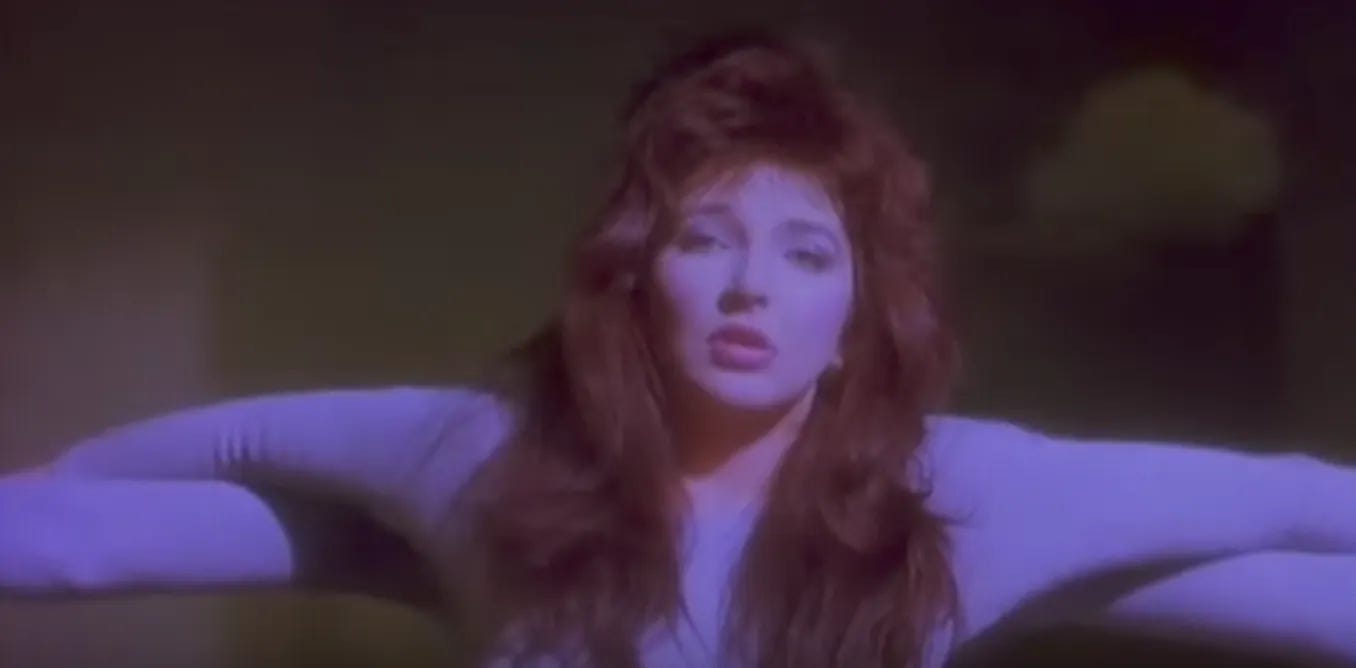
I always assumed that writing about my favorite Kate Bush album would have to wait until one of its anniversaries. While people have always discovered Bush’s music in waves since her 80s heyday, with the benefit of her wise decision to remain a practical recluse, her oeuvre has been allowed to speak for itself, rather than be fragmented into specific eras or periods of cultural relevance. Yet, as I’m sure any reader knows by now, her name has experienced an unprecedented jolt in relevance from acquired taste to viral sensation, thanks to the inclusion of her signature song “Running Up That Hill (A Deal With God)” in season four of the Netflix original television show Stranger Things.
Having seen novelty chart successes before, I assumed that, even with the fever pitch of hype surrounding the show, the song’s charting presence would spike for a week and then die back down, the news cycle moving on to its next bout of viral fervor as it is wont to do. After all, “Bohemian Rhapsody” may have returned to the Billboard Hot 100 after the 2018 film of the same name was released, but it never produced a litany of “how to get into” lists for the act behind it to the degree “Running Up That Hill” has. It certainly didn’t receive radio airplay sequencing it between the likes of Jack Harlow’s “First Class” and Lizzo’s “About Damn Time,” a contrast so jarring that surprise I feel when hearing the sound of gated drums and brooding synthesizers has prevented me from enjoying it when I hear it at random. What’s most startling is that, almost a month after entering the Hot 100—in the top 10, I might add, already topping its original stateside run that never ascended beyond slumming it in the chart’s midsection—the song seems to be making a genuinely viable run for the year-end aggregate chart, a phenomenon so far removed from the initial date of the song’s release that I can confidently say I don’t think I’ve ever seen anything like it before
.I’ll be honest, the only knowledge I have about Stranger Things has been absorbed through cultural osmosis, thanks to all the coverage that has surrounded the show’s unfathomable ability to introduce music from the 80s to a generation of children who are probably now even too young to recognize a Michael Jackson song. (Metallica’s “Master of Puppets” entered the Hot 100 for the first time a couple weeks ago.) I don’t watch much television as it is, and in truth, I have no reason to make an exception for Stranger Things. The show has always struck me as shameless nostalgia bait, not helped by my continued assertion that Netflix does not make real television, instead producing plasticized, antiseptic simulacra of the shows that preceded it, complete with uncanny dialogue and a disregard for basic dramatic structure—at least when Hulu employs a similar strategy, it has the decency to dress it up with a façade of class and good taste.
In any case, the show is not helped by the fact that, as a product of America’s collective retromania, Netflix has already released better shows set in the same decade, which display an understanding of the implications of that setting beyond the bright colors and musical sheen: the dramedy GLOW, despite its uneven humor and frequently clumsy social commentary, is a fun send-up of lowbrow schlock that colored many a television screen from the era; even more pertinent is the limited series I Am Not Okay With This, a legitimately compelling exploration of the emotional dynamics that would result from being the protagonist in a horror story, which features a depth in its pastiche that Stranger Things couldn’t dream of making resonate.
Yet what most suggested the show’s limited understanding of the decade in which it takes place was, unfortunately, its soundtrack, which resembles little more than a Spotify playlist of 80s greatest hits than a unique curation that reflects any real personality. Sure, that assessment welcomes a bit of dissonance, given that its greatest hit has proven to be a song that was never a smash hit in the United States during that era, but its inclusion resembles little more than a wink at the audiences who happened to be in the know to experience Kate Bush’s discography firsthand—otherwise, the show would have featured a more obscure pick than what was already her most popular song, or at least would have displayed some variety in the running motif of her work that’s incorporated throughout the season. I’m not necessarily aggravated by the fact that she’s been introduced to a new generation, because the savvy members would’ve likely found them on their own terms regardless; I’m aggravated that the source of that introduction was a show that only acknowledges her artistry insofar as it allows for a cynical reference point that passes for actual depth.
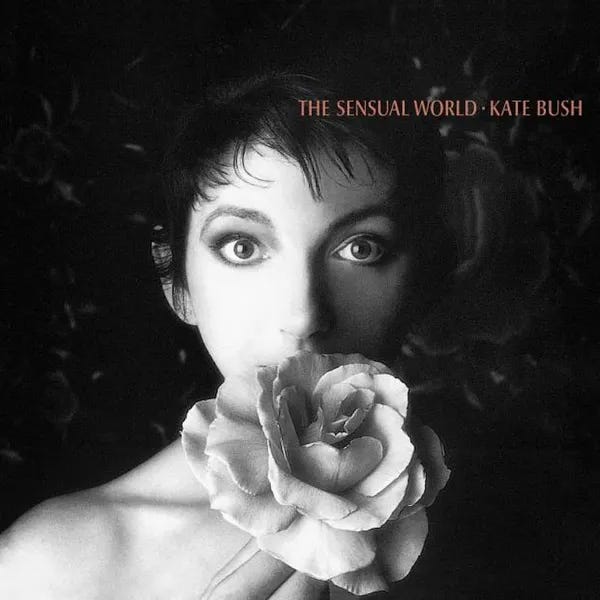
Nonetheless, for all my complaints with the show and the broader cultural landscape that produced it, I would count Kate Bush’s presence as a net positive for the world at large. Her music had previously been the focus of a few isolated memes driven by TikTok, as the extended theatricality of her early work led to “Wuthering Heights” and especially “Babooshka” to become momentary topics of conversation in the app’s accelerated trend cycle, even though most users participating likely knew little to nothing about Bush’s broader discography. The boost from Stranger Things seems to have sparked a fascination spanning beyond a single song: Hounds of Love, the 1985 album that features “Running Up That Hill,” has spent weeks within the top 20 of iTunes and Spotify’s album charts, another astounding feat for a work that is likely more than double the age of the audience that has gravitated to it. With that sustained interest in Bush’s greater artistry, I finally have the chance to make my case for what I have continually regarded as her best and most underappreciated album, the direct successor to Hounds of Love, 1989’s The Sensual World.
Among Kate Bush’s core fanbase, The Sensual World seems to be a peripheral interest, a bridge point between what’s most often heralded as her finest work, Hounds of Love, and the moment where it swiftly became apparent that her career had hit the point of diminishing returns, which came in the form of the 1993 misfire The Red Shoes. It isn’t difficult to see why Hounds of Love is so adored: her closest approximation of straightforward mainstream pop was married to propulsive hooks, consistently awestruck lyricism, and the greatest stakes an album of hers had yet to acquire. These qualities are only further accentuated by the sonic experimentation of the album’s B-side, which was inspired by her experience with nearly drowning prior to the project’s creation. It’s an album that both fans, who appreciate the directness of the A-side’s relative accessibility, and critics, who want to seem high-minded in their approach to her artistry, can both respect. The album has been hailed as a genuine classic as a result, not in the least because of the tremendous influence it has provided for the more experimental pop musicians of today.
The more eclectic pick, the show of being a true fan, comes in The Dreaming, the 1982 predecessor to Hounds to Love, an album that embraces all of Kate Bush’s musical quirks seemingly for the sake of its own eccentricity. Chord progressions fuse and rip apart at random, Bush’s vocal affectations are at their most garish, and the album’s subject matter frequently indulges in its own incoherence to parallel its singer’s rapidly oscillating emotional state: to quote my favorite song from the album, “Some say that knowledge is something sat in your lap / some say that knowledge is something that you never have.” There are fragments of the album I like, but they frequently occur in isolated moments rather than in complete statements, a deterrent for me that is likely more of a feature than a bug to the album’s plentiful, very vocal defenders. The really rogue selection for a favorite within her output is 1980’s Never For Ever, the first album during which Bush really began to experiment with her pop formula, but the moments of concentrated, elaborate dramatics that I find most exciting are songs that most resemble her work prior—I genuinely think “Babooshka” is the album’s best song, but it’s still not in the same tier as a staple like “Wuthering Heights.”
Yet the album that has proven to retain the most beguiling allure for me is Hounds of Love, a project that I so desperately want to love, even as it always manages to just fall short of that affection. I do really enjoy the album beyond the four singles that have rightfully been regarded as some of the best songs of her career, even if my personal preferences remain a bit off-the-cuff. Despite the cinematic grandeur of the A-side’s concluding track “Cloudbusting,” I’ve always held “The Big Sky” as my favorite song from the album, which has always felt a bit odd, given how juvenile the song’s giddiness could seem in comparison to the decidedly adult subject matter that defines the tenacity of the singles’ bombast. I can’t help my appreciation for that song, though, as the buoyant quality of its joyousness seems to transcend any discernment I may have, putting a spring in my step and a smile on my face, a crystallization of the swooning admiration for the world around her that colors the album’s thematic ambition refined to its most simplistic expression, and one I find relentlessly endearing.
I have my qualms with the album’s A-side—the eerie atmosphere of “Mother Stands for Comfort” has never fully gripped me—but it’s the B-side, formally entitled “The Ninth Wave,” that has remained such a struggle for me to enjoy on its own. In terms of what it represents for the greater purpose of the album as a cohesive whole, rather than two disparate parts, it’s a work of artistic daring I respect tremendously. In bridging the gap between her daunting conceptions of capital-R Romanticism (a connection that is likely firmly rooted in that movement, given the consistently literary nature of her lyricism), the fullness of her faith that “just saying it could even make it happen” in matters so huge as to parallel the actual balance of the weather, she’s forced to stare down her own idealistic yearnings with a near-death experience caused by the very natural forces that served as her muse prior to the incident, a task that becomes all the more meaningful when even her understanding of her own mortality has irreparably shifted.
This isn’t to say that I don’t think there are any highlights on “The Ninth Wave”; I think the somber piano ballad “And Dream of Sheep” ranks among her best ever songs, and the invigorating “Jig of Life,” a tribute to Kate Bush’s Irish ancestry, is a welcome shot of vitality that occurs before the more climactic moments that punctuate the album. Beyond that, however, the experience is patchy: whenever the album’s compositions seem to build to a stirring crescendo, they suddenly wrench away, glitching into fractured electronic interjections and disembodied voices, resulting in a sense of emotionality that is never fully grounded.
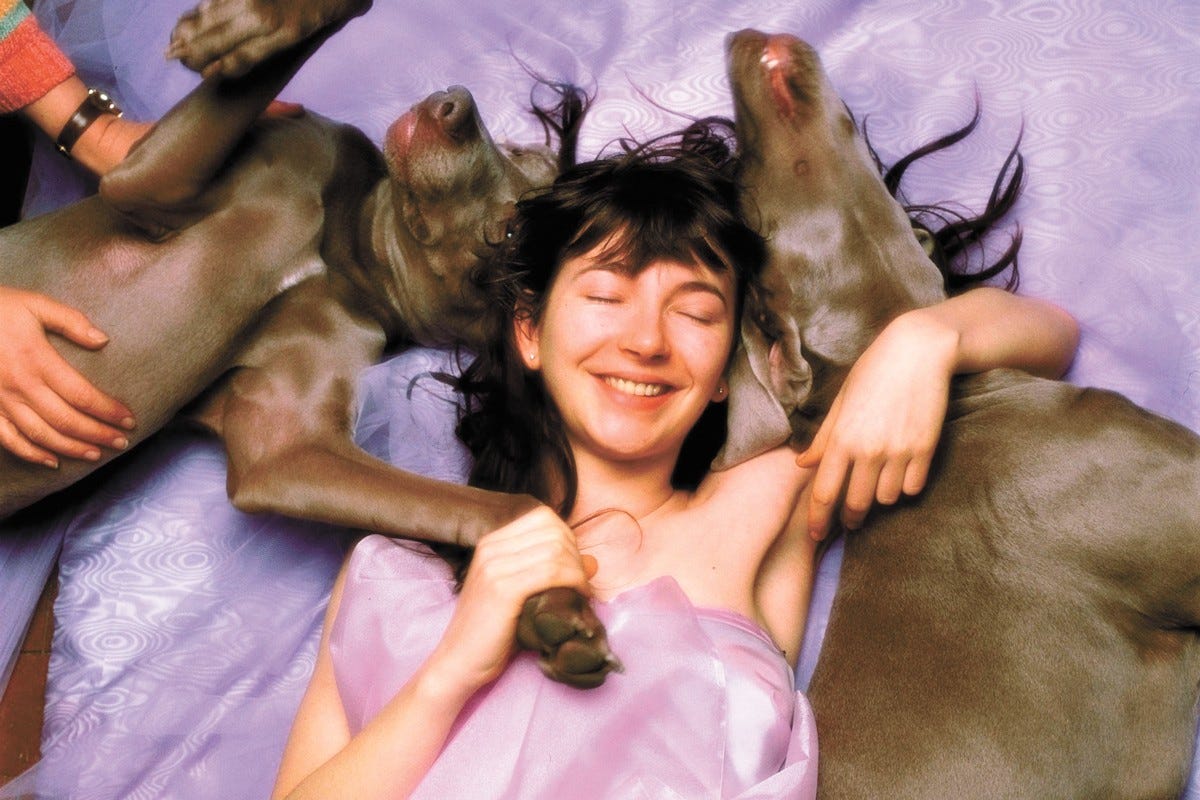
This is by design, mirroring how difficult it likely was to recover from such a traumatic event, but the fragmented nature of the steps the album’s narrative takes to achieve fulfillment of such triumphant stakes leads to an uneven conclusion that never fully coalesces into a greater statement. Even the closing track “The Morning Fog,” an otherwise soothing ballad that utilizes its gentle strums of guitar to magnificently serene effect, seems to end by being yanked away rather than coming to a more intuitive close. While the choice is understandable in reflecting the lack of certainty Bush can even claim in recuperating from the effects of her drowning, the clarity in its tonality is abandoned for the sake of effect.
To many, Hounds of Love represents a culmination of Kate Bush’s artistic impulses, and its highly sequestered nature only reinforces her duality, an album that features both isolated heights of Romantic grandeur and a sprawling, porous narrative that quite literally seeks to transcend its own form. Even as someone who doesn’t share quite the same affection for the album as a whole, I’ll concede that, in a way, such an assessment is correct. However, viewing Hounds of Love as Kate Bush in her ultimate form is more accurate for a specific facet of her career than the entirety of it, ending a chapter that would pave the way for a sort of rebirth with The Sensual World, a shift of which even Bush herself was directly aware.
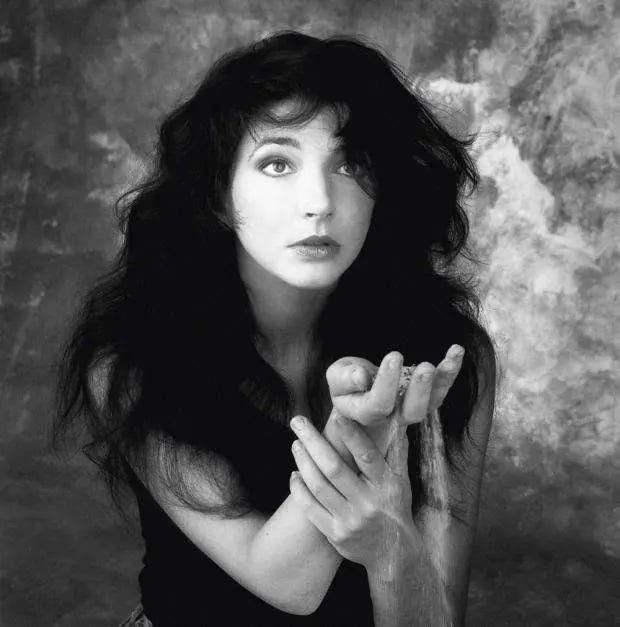
During the creation of The Sensual World, Kate Bush turned 30, reaching a milestone that inspired an evolving approach to her work. In 1989, she told NME that the album represented a newfound understanding of her own music, a shift away from the concentrated expressions of power that she associated with the “male energy” she sought to display in releases like The Dreaming and Hounds of Love. The Sensual World is comparatively more subdued than its predecessors, although definitely not without its own sense of bombast, but one that is allowed to launch forth after indulging in its own grounded spectacles, rather than existing solely to build upon itself. Her lyricism is much more centered, too—instead of yearning for an opportunity to run up that hill that is just out of reach, her poetry embraces intimacy and renders it equally as stirring as her more exclamatory aspirations.
Nowhere is this more apparent than in the title track that opens the album, lead single “The Sensual World.” For this song, Kate Bush famously wanted permission to adapt James Joyce’s Ulysses, but she couldn’t acquire the rights, resolving to write her own lyrics that more so interpolate the original passage than outright quote it. The song contains several of her signature touches, drawing special attention to the natural details that appear throughout the album. Even then, these images take on a specifically evocative quality here, as Bush’s sultry murmurs imbue each reference to fruit and fauna with an especially florid, textured resplendence, making the song unapologetically sexy without ever fully giving away its hand. No doubt it’s intended to be a sex song: the continued incorporation of Bush purring “mmh, yes” only further immerses the listener into its narrator’s orgasmic state. Yet that state resembles more of a trance than raging fire, as exemplified by the temperance of the instrumental arrangement, which mirrors the lyrical references to “where the water and the earth caress” as a popping keyboard line, bass guitar, and even a whip provide the foundation over which a gorgeous line of Uilleann pipes (a form of bagpipes) glides.
That Bush managed to implement bagpipes into a song in a way that sounds genuinely erotic is in of itself a testament to her immense talent as a composer, but the role of the Uilleann pipes serves as an interesting component in the establishing the album as a whole. Whereas a song like the aforementioned “Jig of Life” from Hounds of Love was intended as pure tribute, calling back to her ancestry as a dare to keep moving forward, in “The Sensual World,” the pipes are woven into the mix, acting as the babbling brooks that glisten atop the greater arrangement’s various crevices. It’s a fitting choice for a song that is very clearly grounded in sex while also being about so much more: the chorus refrain of “stepping out of the page” catalyzes a sense of beginning that resembles the birth of its very own album, its instrumentation reaching back into the histories of the people who made Kate Bush who she is in order to forge her own conception with the tools she already has.
Indeed, on The Sensual World, nature is shown not only as a creative muse, but as a primeval force of will, too, two modes of being that feed into each other. “Reaching Out,” arguably the song that speaks in the broadest language, compares a sunflower stretching towards light to the image of a man extending himself for a romance he can never truly attain, quite literally establishing that humanity can never find itself proven superior to nature, but can only complicate its fundamental patterns. Yet Bush’s delivery isn’t apathetic or snide in its judgment; quite the opposite, in fact, as what the song lacks in detail it redeems in bombast, as Bush commands her words with an sustained belting that seems to voice the souls of her subjects themselves, even at their most archetypal.
The Sensual World compresses and expands its perspective to fit each individual narrative at hand, some of which are focused on one particular story, while some are more content to observe a pattern, and others to capture an essence of a relationship while leaving the contours to audience interpretation. Kate Bush intended this album’s structural component to resemble a collection of vignettes, and this serves the complete picture well; the songs are bound by a common sense of vigor rather than a linear narrative structure, which allows each individual track to crest and swell which as much grandeur as needed while never losing momentum. This choice is appropriate, as the impressionistic quality of the album means that the narrative structure becomes more fluid from song to song, relying on a common theme rather than a sense of escalation to bind these stories.
In a retrospective 30th anniversary review of the album for the Quietus, writer and musician Matthew Barton noted the frequent lyrical motif of life cycles that becomes present throughout The Sensual World, viewing this lyrical detail as being emblematic of the album’s evocation of autumnal qualities in both lyricism and instrumentation, merging the liminal spaces the fall season so often creates. This pattern is certainly an expression of the album’s fundamental themes, but the idea that cycles of birth and death are themes unto themselves seems to only consume about half of the album, acting more as a manifestation of the project’s central tenets. There are certainly trends throughout the project: the first four tracks seem to establish the album’s language through fabled terms, introducing the album’s foundations by illustrating them in observable patterns that can be seen just by looking out a window.
What encompasses all of these songs, no matter their specific subject, is the prominence of passion as a motivating force in their stories, the conflict that drives every single narrator. This idea is most literally introduced in the title track, of course, as the word “passion” already has a visceral connotation that is innately sexual in nature, again placing such a powerful force within the primal desires of the human body. “The Fog,” through its elegiac usage of a string symphony that’s almost cinematic, envisions its titular phenomenon as the periphery a love interest occupies when its narrator cannot form a tangible grasp on romance. More so than any other track on the album, “Love and Anger” advocates the necessity of its central emotions being understood as two poles occupying the same duality, borne of the same imagination for the best possibilities of human connection. The “two strings beating, speaking in sympathy,” as the song puts it, become literal, both in the song’s lyrics and its actual sound, as Kate Bush’s vocals leap across the whimsically thrumming bass line and cavernous piano chords, a compositional spryness that truly coalesces once the fury of guitars roar forth at the more guttural chorus.
Yet after the first four tracks is where the album gets much more complicated very quickly, a turn ushered by the presence of “Heads We’re Dancing,” a song whose narrator is horrified to discover that she’s spent a night dancing with Hitler. This decision was inspired by Bush hearing of a real incident from her friend becoming infatuated with a man she discovered to be Robert Oppenheimer, the realization prompting her to wonder how she could’ve been so gullible as to not recognize a clear face of repugnance standing plainly before her. The song does suffer a bit simply due to the audacity of its premise: given how inextricably Hitler’s name is bound to the idea of being the sentient embodiment of evil (rightly so, of course), the song drifts into hyperbolic tones almost by accident.
To her credit, though, Bush makes the wise decision to direct her attention to the fleeting thrills that make the sordid night binding the narrator to her partner so appealing, rather than sensationalizing who the target of her affection really is. (She doesn’t even use his name until the end of the second chorus.) The song never allows the listener for an easy exit strategy, leaving the question open as the central love interest’s invitation for a dance partner lingers in the mix like a taunt to the narrator, apropos for a song that includes the line, “They say that the devil is a charming man / And just like you, I bet he can dance.” Here, passion as a concept is explored as a neutral component of human connection that can be unknowingly complicit in heinous ends, rather than just being the purely positive force that is associated with the concept. It’s a bold subversion that is best left as the punctuating moment of the album’s first half, confronting the listener with the unexpected possibilities that are to follow in the remaining component of the project.
And what a remainder those final five songs are. “Deeper Understanding” most immediately capitalizes on this challenge to passion as a collective concept, with a story that, for its time, was potentially even stranger than “Heads We’re Dancing.” The song tells the story of a narrator, presumably a young man, who, upon discovering a love of computers, begins to actually fall in love with his device to such a degree that his family has to stage an intervention just to return him to normalcy—although even that can’t fully quell his urge to reunite with the solace he found in his programs. Of all the songs on The Sensual World, even though it’s not quite my favorite, “Deeper Understanding” is likely the track that could easily earn an essay of its very own, as its brilliance is so spellbindingly multifaceted. More importantly, it’s absolutely a song that could not be made today, because if it were, its technological focus would almost certainly prompt the songwriter to interject some form of social commentary into the song’s central dynamic, given that, in the age of the smartphone, so much of society seems to have unconsciously fallen in love with our computers in a similarly perverted way.
In 1989, however, computer science was a genuinely niche interest, confined to the narrow entry points of catalogs and phone numbers to gain any sort of access to community. Within such a framework of isolation, the all-encompassing, almost hypnotic comfort a computer could provide could very well resemble a connection unlike any other, forging an intimacy that could seem special when its existence is entirely dependent on gratifying the curiosities of the owner. It becomes even more admirable at its most bizarre, as Bush fully leans into the sexual subtext of the dynamic by enunciating her words as if they’re bubbling from her tongue, the bulbous intonation of “I’ve never felt such pleasure” seeming to command her entire diaphragm.
Kate Bush understands the power of even the illusion of an outreached hand from the caress of a yawning void, placing the technological implementation solely in a context of very human bonds. Her intuitive grasp on such fringe subject matter is likely due to a personal connection to such mercurial focus; as canny fans have observed, the “execute” button that is mentioned in the song’s pre-chorus is also the name of a key on Bush’s beloved Fairlight synthesizer, an instrument of which she was a solitary architect in her own music. Computers are not just automatons for gratification; they can be the forces of genuine artistic evolution, a balance that can easily become skewed in the hands of someone whose tenability to their subject overrides their discipline.
That fusion between the real and the artificial becomes most sublime, however, in the song’s orchestration, merging the elasticity of its thrumming bass line with an almost transcendent burst of choral harmonies from the Bulgarian troupe Trio Bulgarka. The heavenly, overpowering glow of those almost otherworldly voices blended with the subtle warping of their foundation sounds like the very embodiment of blue light emitting from a screen, entirely too prescient in how it understands the surreal, addictive allure of devices that, to this day, are still incomprehensible to the human mind, no matter how much obsession subsumes the rational measures of these pursuits. After all, what else is obsession but passion that has reached a fever pitch? Like with the rest of The Sensual World, the concept isn’t so much a virtue as it is a prism through which to understand interpersonal connections, an urge that, like with all components of human nature, has as much of the capacity to harm as it does help one in their experiences.
This multifaceted understanding reaches a naturally climactic end in the album’s penultimate track, “Rocket’s Tail (For Rocket),” the closest thing to a straightforward progressive rock song Kate Bush has conceived in her entire career. Of course, with her touch, especially on this album, the song can hardly be confined to one genre, as it begins with an a cappella blend of Kate Bush’s voice with the Trio Bulgarka, as their vocalizations seem almost tearful in their arresting wails that forge the wall of the song’s sound. Named for Bush’s cat, Rocket, recognizing the irony in naming such a feeble animal after a machine so powerful, the song depicts the story of its narrator donning a makeshift rocket on their back, attaching gunpowder to it, and testing its mechanics by jumping off a bridge and into the nearby river, seemingly having caught fire themself.
Depending on how closely the lyrics are heard, the song could be interpreted as both a paean to victory or a eulogy for a story of tragic hubris, and the catharsis in the song’s blazing arrangement of guitars and sparks of vocal bombast lies in that duality. There’s an element of victory in tragedy, and vice versa, one that is represented in the short fuse of a rocket itself—it burns out almost as quickly as it is lit, but for a moment, it is magical, death-defying and fiercely invigorating all the same. The heat of human emotion is an easy parallel here, notably one of the two instances (the other being the preceding track “Never Be Mine”) in which the album uses the force of fire to complete its exploration of elemental examinations of passion, having already demonstrated water (“The Sensual World”), air (“The Fog”), and earth (“Reaching Out”) to complete its quartet, completing this union by reuniting this imagery of fire with the water that began this exploration, starting the cycle anew once again.
However, The Sensual World doesn’t end there—it needs a moment of relief, a glimpse of serenity to relieve the listener from the intensity of such a resolution. Here is where “This Woman’s Work,” the most successful single from the album, finally makes its appearance, serving as a particularly potent coda for the album’s arc. The song was initially written for the soundtrack of the 1988 John Hughes film She’s Having a Baby, one of the only instances of Kate Bush lending her genius to a collaborative effort. Some audiences have only been introduced to the song from the Maxwell cover that followed 15 years later, and as I have written previously, that’s of no issue to me. I think both versions are on equal footing in terms of sheer quality—yet I can’t deny that Bush’s original feels more intuitive as a piece within the greater framework of the album.
The narration demonstrates the birth of a child—again completing a life cycle introduced on “The Sensual World”—bringing forth all the repressed emotions and neglected issues persisting in a marriage, told from the perspective of the father who watches his wife give birth in real time and sees her extend the strength that he feels unraveling within himself. The reversal of gender roles is made even more elegant in how little it seeks to congratulate itself for the subversion, simply setting the scene plainly. The emotions are made that much more devastating for the starkness with which they are depicted, the lone accompaniment of a piano and a gradual deep well of orchestral arrangements simmering as the song’s revelations press further towards the forefront. As a ballad, it’s stunning; as a closing track, it’s haunting in how effective it is. The beauty that gave way to the experience that catalyzes these revelations is the very sublime quality that brings forth so much palpable regret, a perfect reflection of how nuanced the quality of passion can reveal itself to be in the moment, where it is deeply, painfully felt in all its burning colors.
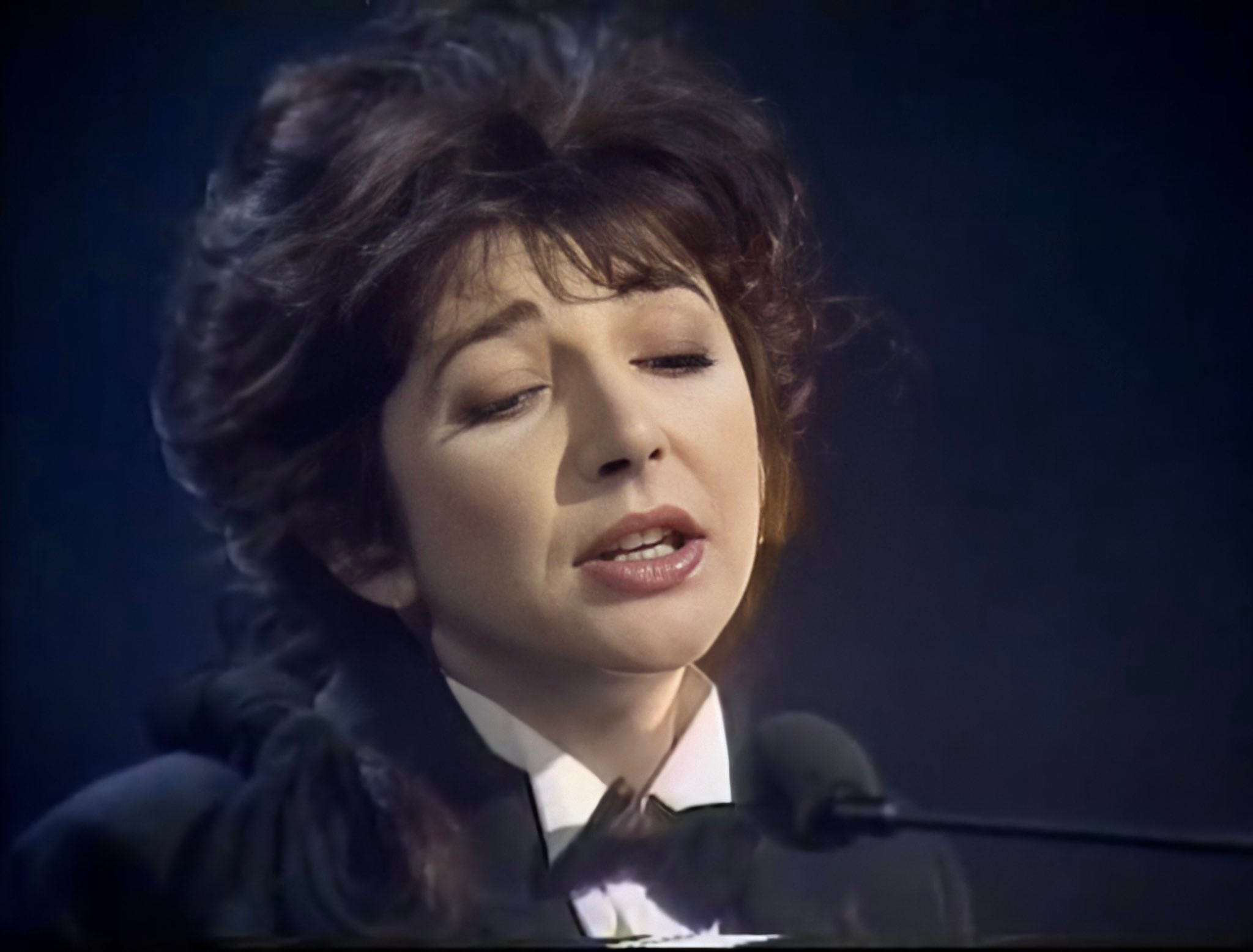
When people discuss the works of art with which they wish they could interact again for the first time, film and literature tend to be prioritized as the mediums of choice for such conversations. Albums tend to be so embedded within our psyches so much that they move with us as our lives grow and change, not in the least because they’re easily the shortest art form of the three I have just listed. Regardless, when I think of an album I would love to hear for the first time again, one of the few selections I could even seriously consider is The Sensual World. I remember what it felt like when I first heard the uproarious “Love and Anger” and realized that my affection for this album spanned far beyond the reaches of its title track. After having been somewhat disappointed in prior albums that had been acclaimed as hallmarks of Kate Bush’s catalog, hearing The Sensual World for the first time felt like an epiphany, one that was so special because it didn’t stop; its profundity was everlasting.
It’s that sustained desire to interact with this album with fresh eyes again, though, that makes me understand just how valuable it is that I have the privilege of returning to its charms again and again. I truly could have written so much more for this essay than I did; I have so many thoughts on each individual track that I had to limit myself to observations that accentuated the central points of my overall thesis. The very qualities that have made me adore this album are those that make me want to relive the serendipitous moment of discovery all over again, and yet make me ever so grateful that I reveal new details of its construction with each passing listen.
That duplicitous, confounding enthusiasm with which this album has enthralled me is in of itself reflective of its themes, yet more proof that passion is a force that gives, takes away, and then uses that absence to give once more. To me, it is the most rapturous display of Kate Bush’s creative prowess that I could ever imagine. If there is a better observation of her spirited, blooming Romanticism than an investigation of the very feeling that spurs it, for all of its costs and rewards, I’ve yet to hear a work that reaches these soaring, magnificent heights.